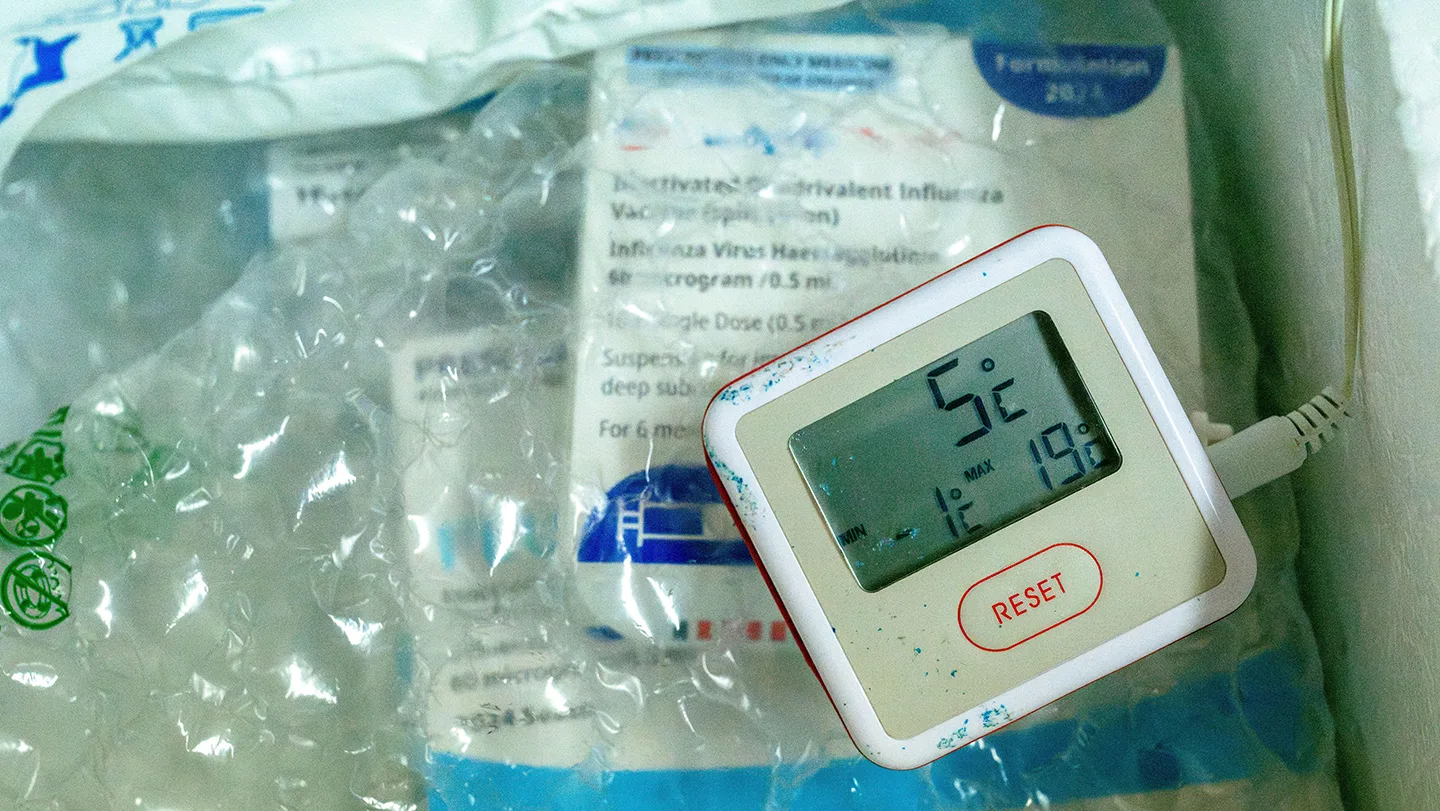
The vast majority of existing vaccines must be kept cold, a costly logistical challenge that limits access for millions of people in poor and war-torn regions. A new vaccine could overcome these storage limits.
An experimental combination vaccine for tetanus and diphtheria remains effective when kept out of the refrigerator for a year or more, researchers report August 5 in Lancet Discovery Science. The team is now investigating whether the technique used for this vaccine can be applied to other vaccines, including those for hepatitis B and HPV.
The new Td vaccine is a repurposed version of a vaccine already approved by the World Health Organization, says biochemist Karen O’Hanlon, chief operating officer of Stablepharma, the London-based company that created the new vaccine. The data show it offers the same efficacy as existing vaccines, she says, adding that the company can confidently extend the shelf life of its fridge-free vaccines to at least 4 years. This would be “significantly longer than any other vaccine product on the market at present,” says O’Hanlon.
Public health agencies including the U.S. Centers for Disease Control and Prevention strictly recommend keeping vaccines between 2°C and 8°C from manufacturing until administration. Refrigeration ensures these delicate biological products do not break down and the vaccine does not lose potency. But 2.7 billion people lack reliable access to vaccines, in some cases because vaccine cold-storage equipment is destroyed and fuel and power are interrupted. That makes it difficult to keep vaccines cool. Fifty percent of vaccines produced globally each year are wasted, in large part because temperature fluctuations during storage damage their efficacy.
The World Health Organization makes a few exceptions to the usual cold-storage rules when higher temperatures do not affect stability. But even then, vaccines typically go without refrigeration for only 3 to 4 days. Freeze-drying can extend a vaccine’s shelf life and may affect its temperature tolerance. A freeze-dried oral rotavirus vaccine, for example, can be stored at 25°C for 30 months. But that is a rare example. The low temperatures created during freeze-drying can also damage vaccine components.
Because of these challenges, pediatric immunologist Saul Faust and colleagues at the National Institute for Health and Care Research in England set out to create a safe and effective vaccine that did not need refrigeration. They began with TetaDif—an existing tetanus-diphtheria combination vaccine. The researchers teamed up with Stablepharma, whose StablevaX technology adds inert pharmaceuticals, including the sugar trehalose, to a vaccine’s components before freeze-drying. This pharmaceutical assortment forms a protective layer that immobilizes the components and maintains their stability even when temperatures rise. Sterile water is injected into the vaccine before use.
The inspiration for using trehalose came from desert plants that can survive years of drought. These plants use trehalose in place of water to maintain the shape of their cells.
In the trial, 60 participants in the United Kingdom ages 18 to 55 who had not received a tetanus or diphtheria vaccine for at least 10 years were injected once with either the new vaccine, called SPVX02, the TetaDif vaccine it was modeled on, or another tetanus-diphtheria combination vaccine called diTeBooster.
SPVX02, stored at up to 30°C for a year before administration, did not cause any serious side effects. In follow-up examinations 28 days later, scientists found that all SPVX02 recipients had immunity against tetanus and diphtheria toxins that matched that of participants who received the other vaccines.
In separate animal studies, the new vaccine maintained its potency at 30°C with 75 percent humidity for two years, and at 40°C with 75 percent humidity for six months, meeting temperature-tolerance requirements for regions with heat and high humidity. An upcoming trial will further compare the vaccine’s safety and efficacy with TetaDif in 160 people.
Chemical engineer Jennifer Pancorbo of North Carolina State University in Raleigh is pleased to see a possible solution to some limitations of freeze-drying and to see that the vaccine produced an immune response equal to or better than that of the standard vaccines.
One current drawback is that the technology cannot be applied to mRNA vaccines, which are stored at temperatures as low as -90°C. “These vaccines typically contain lipid nanoparticles which make the freeze-drying part of the manufacturing process difficult to perform,” O’Hanlon says.



Comments 0
No comments yet. Start the conversation.
Leave a comment