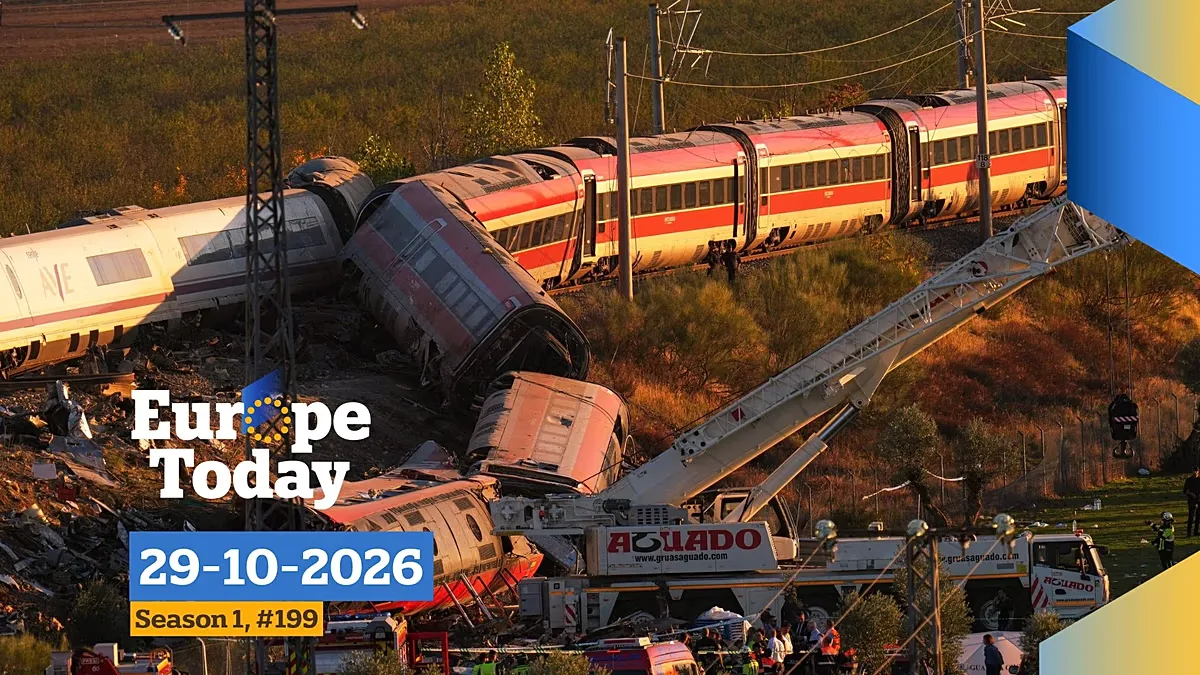
Tragedy in Spain: At least 68 people have been killed and over 100 injured following a collision between two high-speed trains south of Madrid on Wednesday, according to the regional government of Castilla-La Mancha. The incident is already being referred to as one of Spain's deadliest rail disasters.
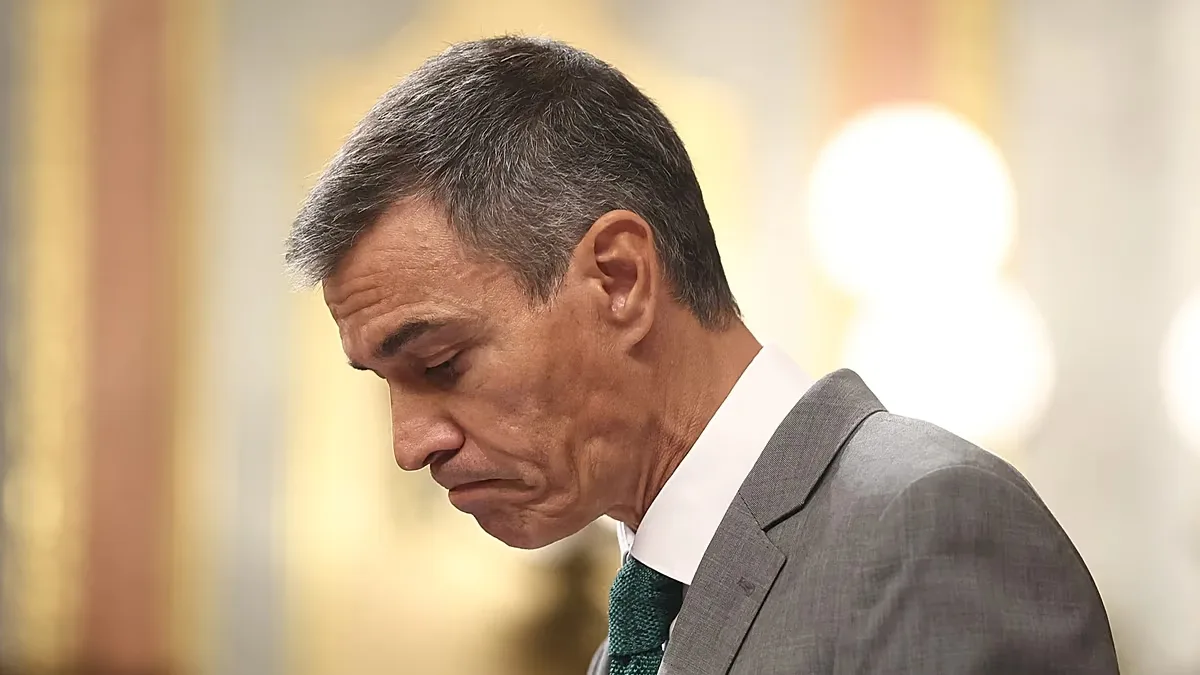
Spanish Prime Minister Pedro Sánchez said he was "shocked" by the accident, and that he remained in contact with the transport minister and the Castilla-La Mancha autonomous community president. He also vowed there would be a full investigation into the disaster, stating: “It is unacceptable for Spain to suffer two such accidents in the same year”.
Wednesday's crash comes just nine months after another collision involving two high-speed trains near the southern Spanish town of Adamuz killed 46 people, raising serious concerns about rail safety in the country.
“It is clear that, if we need to further strengthen safety to rebuild confidence in our rail system, we will do so,” Sánchez added.
Allies from across Europe have offered condolences and words of support. “Europe mourns with you,” President of the European Commission, Ursula von der Leyen, said in the aftermath.
Can he beat the odds? The incident raises fresh questions about whether Sánchez can survive the snap election he called for late November following the Ceuta migration scandal and the housing crisis that rocked the country.
EU associate membership, or non-starter?: As Europeans dealt with the bombshell news from von der Leyen’s agenda-setting State of the European Union speech in Strasbourg in September — that Canada has been invited to become an EU associate member, whatever that means — onlookers have been stunned by another twist of events.
The term has now been scrapped from a draft joint declaration expected to follow a much-hyped two-day summit in Montreal starting today. This is according to reporting by my colleague Luca Bertuzzi, who writes in must-read reporting that the term has been replaced by a more general commitment to “ever closer association” between the EU and Canada.
An earlier draft containing the “associate membership” idea was put to member states on Tuesday, but Germany, France, Italy and Greece all raised issues with it.
A twist on a twist: But late last night von der Leyen posted on X that she had landed in Canada, while offering a defiant message seemingly flying in the face of this reporting. “We have ambitions: bringing Canada closer to the us than ever before, as Associate Member of the EU.”
It’s not about the destination: At a briefing attended by Brussels journalists, EU officials were pressed repeatedly about the “associate membership” term on Tuesday — and what it could actually deliver. Appearing exasperated, one senior EU insider said: “We are on the start of a journey”. The generalisation prompted laughter from the room.
He went on to say that leaders will meet to launch “a new alliance for the future”. Hopefully this is one that meets Canadian Prime Minister Mark Carney’s expectations, and can satisfy the 27 member states too.
What we know: 10 European Commissioners will attend the two-day meeting in the Canadian city, which was previously intended to explore what associate membership could look like.
Now, discussions on deeper defence, energy and trade cooperation are expected, but could face obstacles over issues such as the fact that the 10-year-old EU-Canada free trade agreement (CETA) has yet to be fully implemented.
Missing in action: Ukrainian President Volodymyr Zelenskyy has repeatedly said his country has been waiting over a month for US Secretary of Defence Pete Hegseth to sign off on Patriot interceptor missiles while Russia continues to pound Kyiv with ballistic missiles.
Ukraine receives some of its Patriot systems through NATO’s PURL (Prioritised Ukraine Requirements List) mechanism. This is a system through which allies pay for US-made weapons to be transferred to Ukraine.
As my colleague Shona Murray writes, confusion reigns as to what the holdup is. Are officials in Washington withholding Patriots to pressure Ukraine into an unequal peace settlement with Russia?
Or, are officials in Washington using the Patriots as leverage to force Kyiv to stop attacking Russian diesel refineries ahead of next week’s midterms as demanded by US President Donald Trump?
NATO sources tell Shona that the situation is “unpredictable” with no clear answers.
Throwing energy into the mix: The Nord Stream pipeline will not bring Russian gas into Europe after the war in Ukraine comes to an end, the European Commission has said, pushing back against a joint attempt by Washington and Moscow to revive the controversial project.
“We know far too well the hidden costs of being dependent on Russia for the purchase of fossil fuels,” Paula Pinho, the Commission’s chief spokesperson, told my colleague Jorge Liboreiro on Wednesday.
“They have been weaponised and we have been paying the price, so we do not forget that.” Pressed on whether the thinking would also apply to the post-war scenario, the Commission pointed to the legislation that member states approved to phase out all imports of Russian gas by the end of 2027, which is binding on all.
EU's push to reduce reliance on China could come at a price
The EU faces a narrow path to diversifying away from China, according to exclusive reporting by Peggy Corlin.
The European Commission is set to present a plan in early December on how to achieve this, a week before EU leaders meet to discuss the bloc’s trade relationship with Beijing. The aim is to push European companies to diversify their suppliers when they rely on a single country for strategic products.
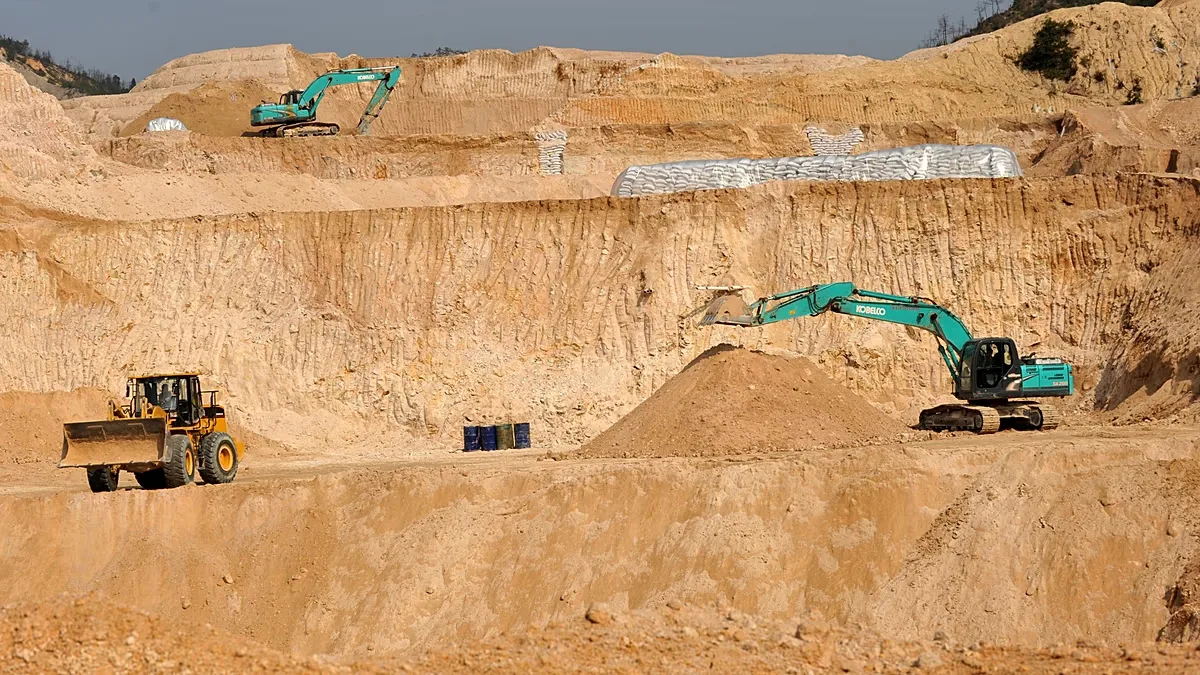
In 2025, EU industries were put at risk after China blocked exports of rare earths and certain strategic chips, exposing the vulnerabilities of an EU economy heavily dependent on China across multiple sectors.
But European businesses have raised concerns about the future ‘diversification tool’. “Costs will increase,” they warn. “Which sectors will be covered?” they ask.
Tobias Gherke, a senior policy fellow at the European Council on Foreign Relations, said that a “minimalist” scenario could cover just a handful of critical sectors, while a “maximalist” approach could see EU businesses paying more for strategic products because of tariffs.
The latter, covering a wider range of sectors, would be more disruptive. Dive into the trade divide with this story.
More from our newsrooms
EU and Canada explore LNG deal as Europe grapples with gas dilemma. The EU and Canada will explore long-term exports of liquefied natural gas (LNG) to Europe as the bloc grapples with soaring gas prices and historically low storage levels, according to a draft joint statement for the EU-Canada summit in Montreal on 29-30 October, seen by Euronews. Marta Pacheco has the scoop.
Hungary’s €5.4bn defence loan approved as EU wraps first SAFE round. The European Commission has approved Hungary’s €5.4 billion defence loan application, completing the first round of SAFE allocations and leaving just over €21 billion available for a new funding round. Read more of this story by yours truly.
UK budget: Here’s five key takeaways from the Chancellor’s speech. Britain's economy will grow slightly faster than forecast this year before slowing in 2027, finance minister John Healey said on Wednesday as he presented the government's annual budget. Angela Barnes has the analysis.
We’re also keeping an eye on
Energy ministers meet in Luxembourg for an Energy Council.
The EU-Canada summit starts on Thursday in Montreal with a dinner hosted by Canadian Prime Minister Mark Carney.
European Commission Executive Vice-President for Cohesion and Reforms Raffaele Fitto meets Prime Minister of Lithuania Mindaugas Sinkevičius in Vilnius.
There will be a Governing Council meeting of the European Central Bank in Frankfurt, Germany. Press conference scheduled at 2:45 pm CET.
European Commissioner for Climate Wopke Hoekstra meets Dutch Finance Minister Eelco Heinen at The Hague.
European Commissioner for the Budget Piotr Serafin meets Bulgarian Finance Minister Galab Donev in Sofia.
That’s it for today. Vincenzo Genovese, Jorge Liboreiro, Shona Murray and Peggy Corlin contributed to this newsletter.
Comments 0
No comments yet. Start the conversation.
Leave a comment