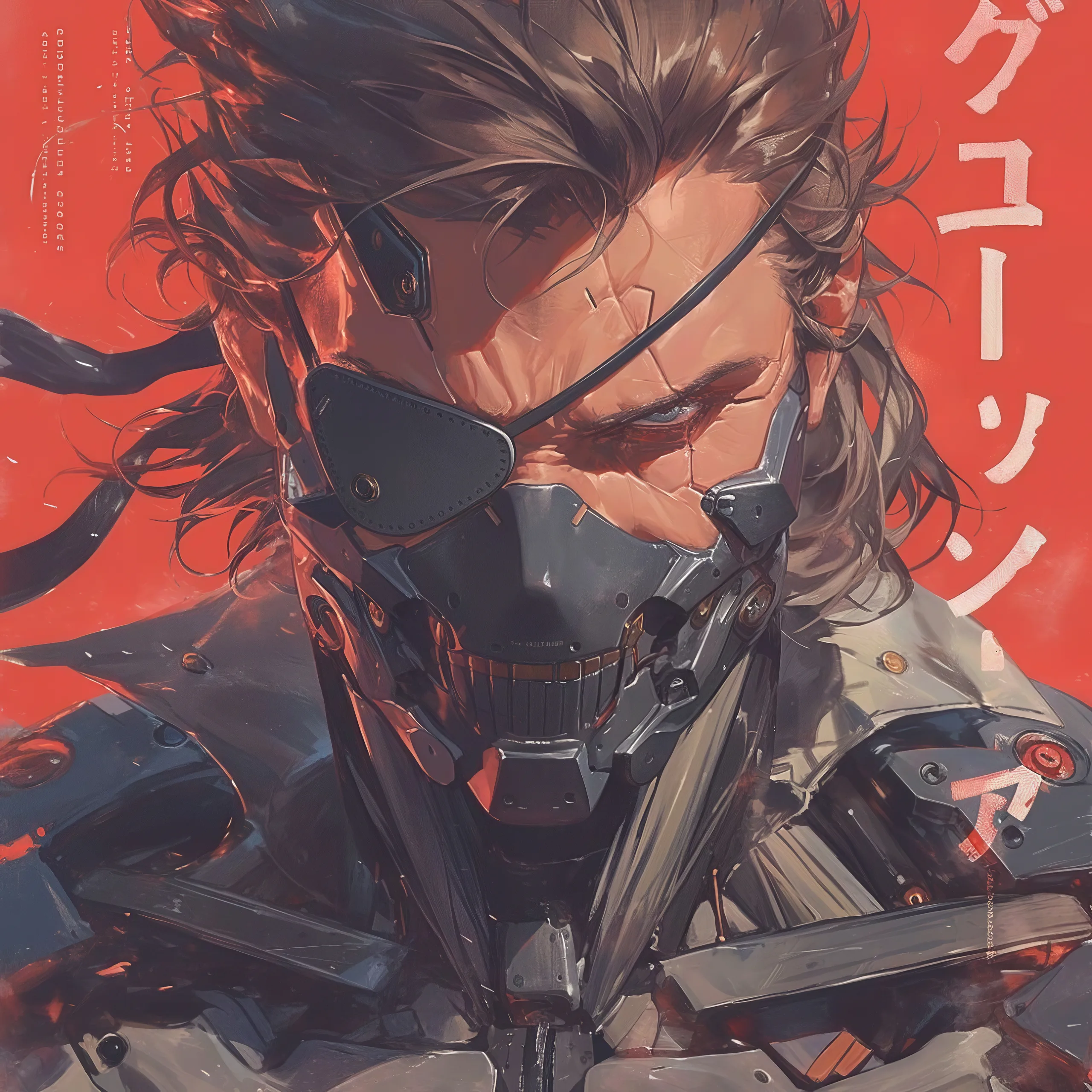
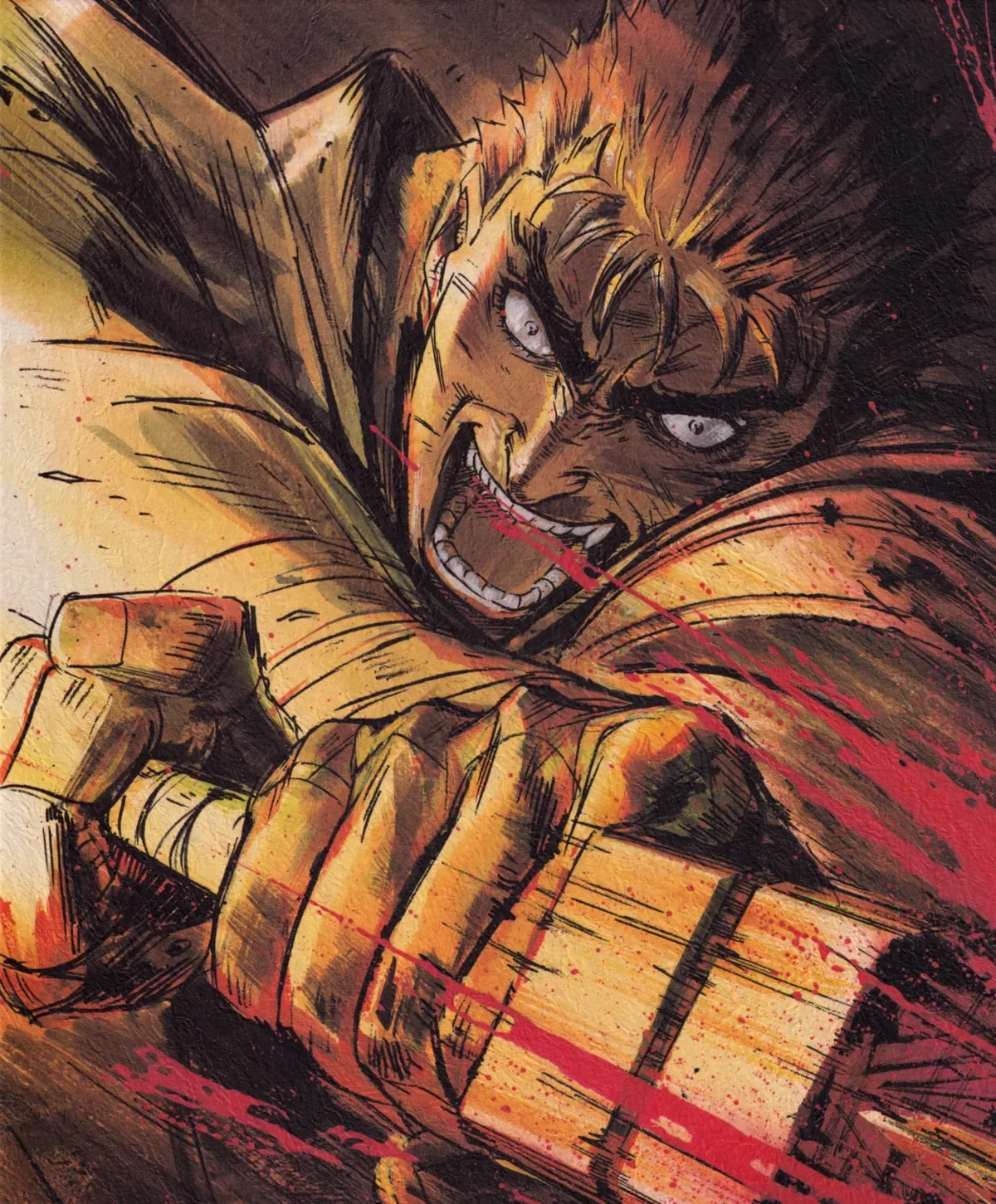
This list focuses on anime where brutality is part of the experience rather than simple decoration. Some rely on gore, others on overwhelming odds, emotional devastation, or the sheer ferocity of their fights. Either way, these ten shows know how to make combat hurt.
10. Trinity Blood
Set in a post-apocalyptic world shaped by conflict between humans and vampires, Trinity Blood combines gothic imagery with stylish and surprisingly violent action.
At the center of the story is Abel Nightroad, a priest who appears unassuming until combat begins. His fights mix supernatural powers, swordplay, aerial confrontations, and blood-soaked transformations with the series’ strong religious aesthetic.
It does not reinvent vampire anime, and there are shows that take the violence much further, but Trinity Blood has a distinctive elegance to its brutality. Abel’s transformation from mild-mannered priest into a merciless combatant produces many of the series’ strongest moments.
For anyone looking for gothic atmosphere, vampires, and stylish violence in the same package, it remains an entertaining choice.
9. takt op.Destiny
takt op.Destiny approaches action from a much more colorful direction. In its world, music has effectively disappeared because mysterious creatures known as D2 are drawn to it, forcing humanity into a strange new reality.
The battles are built around Conductors and Musicarts, with the central duo fighting through beautifully animated sequences filled with explosive movement and visual flair.
With Madhouse and MAPPA involved in production, the action frequently looks spectacular. Fights move with impressive fluidity and often feel closer to choreographed performances than conventional battles.
The brutality here is less about extreme gore and more about consequences. Characters are lost, cities are destroyed, and the fate of the Musicarts adds an emotional edge to the spectacle.
The biggest weakness is the storytelling. The early episodes establish a promising foundation, but the plot becomes increasingly uneven, with underdeveloped characters, abrupt conflicts, and a finale that struggles to pay off the initial buildup.
Even so, when takt op.Destiny is fighting, it can be beautiful.
8. God Eater
Adapted from the game series, God Eater brings post-apocalyptic monster hunting to anime with enormous weapons, catastrophic battles, and humanity constantly appearing one mistake away from extinction.
The enemies are Aragami, terrifying creatures that force the God Eaters into battles where victory rarely feels guaranteed.
Ufotable’s distinctive visual style gives the series an unusual appearance, while combat emphasizes scale and destruction. Characters swing weapons almost as large as they are, tear into monsters, and fight through encounters that frequently descend into complete chaos.
The plot may not reinvent post-apocalyptic storytelling, but the fights are the real attraction. Much of the brutality comes not simply from bloodshed, but from watching a small group of fighters confront enemies that seem almost impossible to stop.
Fans of large-scale monster battles should find plenty to enjoy.
7. B: The Beginning
B: The Beginning mixes mystery, crime drama, supernatural elements, and violent action into one of the stranger entries on this list.
Its fights can shift from grounded hand-to-hand combat to clashes involving superhuman abilities, but they retain a sharp and dangerous quality. Attacks feel precise, characters suffer serious injuries, and victories frequently come with consequences.
The violence also works because it is connected to the personalities involved. Personal revenge, hidden motives, and the darker elements of the mystery give many confrontations emotional tension beyond the immediate fight.
The series occasionally feels like a collision between Psycho-Pass and Tokyo Ghoul: part psychological thriller, part supernatural action story.
It may not be the most famous anime here, but anyone looking for a darker mystery with stylish combat should not overlook it.
6. Deca-Dence
At first glance, Deca-Dence appears to be another post-apocalyptic action anime about humanity surviving against monsters. It quickly becomes something much stranger.
Humans live aboard the enormous mobile fortress Deca-Dence while fighting gigantic creatures known as Gadoll. The battles feature aerial movement, close combat, explosive weaponry, and groups of fighters launching themselves directly into swarms of monsters.
The action is fast, colorful, and energetic, but there is still plenty of brutality underneath the spectacle. Characters face overwhelming assaults, desperate sacrifices, and situations where survival never feels guaranteed.
Its biggest strength is that it does not remain the straightforward story it initially appears to be. Without spoiling its central twist, Deca-Dence continually expands its world and changes the viewer’s understanding of what is happening.
It is strange, creative, violent, and considerably more ambitious than its familiar opening suggests.
5. Ajin: Demi-Human
Immortality sounds like a useful ability until Ajin: Demi-Human shows what people might actually do with someone who cannot permanently die.
Ajin can regenerate from injuries that would instantly kill an ordinary person. That ability gives the series permission to push its fights much further than usual because death itself becomes another tactical tool.
Characters are shot, mutilated, blown apart, and subjected to horrific experiments only to regenerate and continue.
This makes the combat unusually strategic. An Ajin does not necessarily need to protect their body in the way a normal person would, opening possibilities for ambushes and tactics that would be suicidal anywhere else.
The CGI animation can be divisive, but the violence and psychological tension remain effective. More disturbing than the gore itself is the way Ajin are treated by governments and researchers, reducing supposedly immortal people to disposable test subjects.
It is a dark action series where being impossible to kill does not make existence any less terrifying.
4. Undead Unluck
Undead Unluck proves that extreme violence can also be hilarious.
Andy cannot die. He regenerates from practically any injury, and instead of treating this ability cautiously, the series turns his body into a weapon.
That creates some wonderfully absurd battles. Limbs can be sacrificed without hesitation, injuries become tactical opportunities, and confrontations escalate into explosions, dismemberment, and increasingly ridiculous applications of supernatural abilities.
What separates Undead Unluck from darker entries on this list is its sense of humor. The violence is extreme, but the show rarely becomes oppressive because absurd comedy constantly cuts through the bloodshed.
Its larger power system also allows battles to become increasingly creative as characters use strange abilities with very specific rules.
The result feels like a collision between bizarre battle anime, dark comedy, and unapologetically excessive action.
3. Ushio and Tora
Ushio and Tora brings the energy of classic shonen into a more modern production without losing the raw intensity that made older action anime so memorable.
Ushio fights using the legendary Beast Spear alongside Tora, a powerful yokai with a personality nearly as dangerous as his abilities.
The series throws them against increasingly vicious supernatural enemies, producing battles that are fast, aggressive, and frequently punishing. Yokai rarely show restraint, forcing Ushio into confrontations that test far more than his physical strength.
That emotional dimension matters. Battles leave scars, relationships change, and the pressure placed on Ushio continues to accumulate as the story progresses.
There is an old-school quality to its storytelling that recalls classic shonen adventures, but the action still feels energetic and immediate.
For viewers who miss straightforward monster-fighting anime where heroes are constantly pushed beyond their limits, Ushio and Tora delivers.
2. FLCL
Trying to explain FLCL in a few sentences is almost impossible, which is also a good description of watching it.
Across just six episodes, the anime mixes science fiction, coming-of-age drama, absurd comedy, giant robots, aliens, guitars, and enough visual chaos to make almost every episode feel unpredictable.
Its violence is not the bloodiest on this list, but its fights are brutally energetic.
Characters are thrown through environments, enormous machines smash into one another, and battles can escalate from an ordinary conversation into complete destruction without warning.
The animation gives every confrontation a sense of momentum that few series can reproduce. Rules seem optional, physics even more so, and the soundtrack amplifies the feeling that the entire anime is operating at a frequency slightly beyond normal reality.
FLCL is less interested in conventional combat than controlled chaos.
That is precisely why its fights remain so memorable.
1. 86 Eighty-Six
The most devastating battles are not necessarily the ones with the most blood.
86 Eighty-Six understands that brutality can come from knowing exactly who is inside a machine when it stops responding.
The story takes place during a war supposedly fought using unmanned weapons. The truth is far uglier. The machines are operated by the Eighty-Six, a persecuted group sent into combat while the rest of society pretends no human lives are being sacrificed.
Its battles are fast, destructive, and beautifully staged, with machines tearing through one another across hostile battlefields. Yet spectacle is never the point.
Every operation carries emotional weight because the series spends time making its soldiers feel like people before sending them into situations where not everyone is expected to return.
Loss accumulates.
Characters disappear. Survivors continue fighting. Each mission adds another layer of exhaustion, grief, and psychological damage.
That is what makes 86 more brutal than a series built entirely around gore. The machines may explode spectacularly, but the anime constantly forces the audience to think about the people inside them.
Combined with powerful music and some exceptional action direction, the result is a war story where every battle feels dangerous physically, psychologically, and emotionally.
86 Eighty-Six earns the top spot because its violence means something. The fights are intense, but the human cost is what makes them devastating.
Final Thoughts
Brutality in anime can take many forms.
Trinity Blood delivers gothic bloodshed. Ajin turns immortality into body horror. Undead Unluck transforms dismemberment into comedy, while God Eater and Deca-Dence overwhelm their characters with impossible monsters.
Then there is 86, where the hardest blows are often emotional rather than physical.
That variety is what makes violent action anime so compelling. The best fights are not memorable simply because someone loses an arm or an entire city explodes. They stay with you because the series gives that destruction tension, personality, and consequences.
And sometimes, the most brutal part of a fight is realizing who will not be coming back when it is over.
Comments 0
No comments yet. Add a thoughtful first response.
Log in to comment