
That is the appeal of this 2026 selection. Rather than concentrating on a single genre, it moves between science-fiction shooters, survival horror, demanding role-playing adventures, cooperative nightmares, and open-world racing. The common thread is not scale or spectacle alone. Each game offers a particular experience that makes it stand out, whether that means hacking a robot while dodging its missiles or turning a dangerous wilderness route into a road other players can use.
1. Pragmata — Shooting Is Only Half the Problem
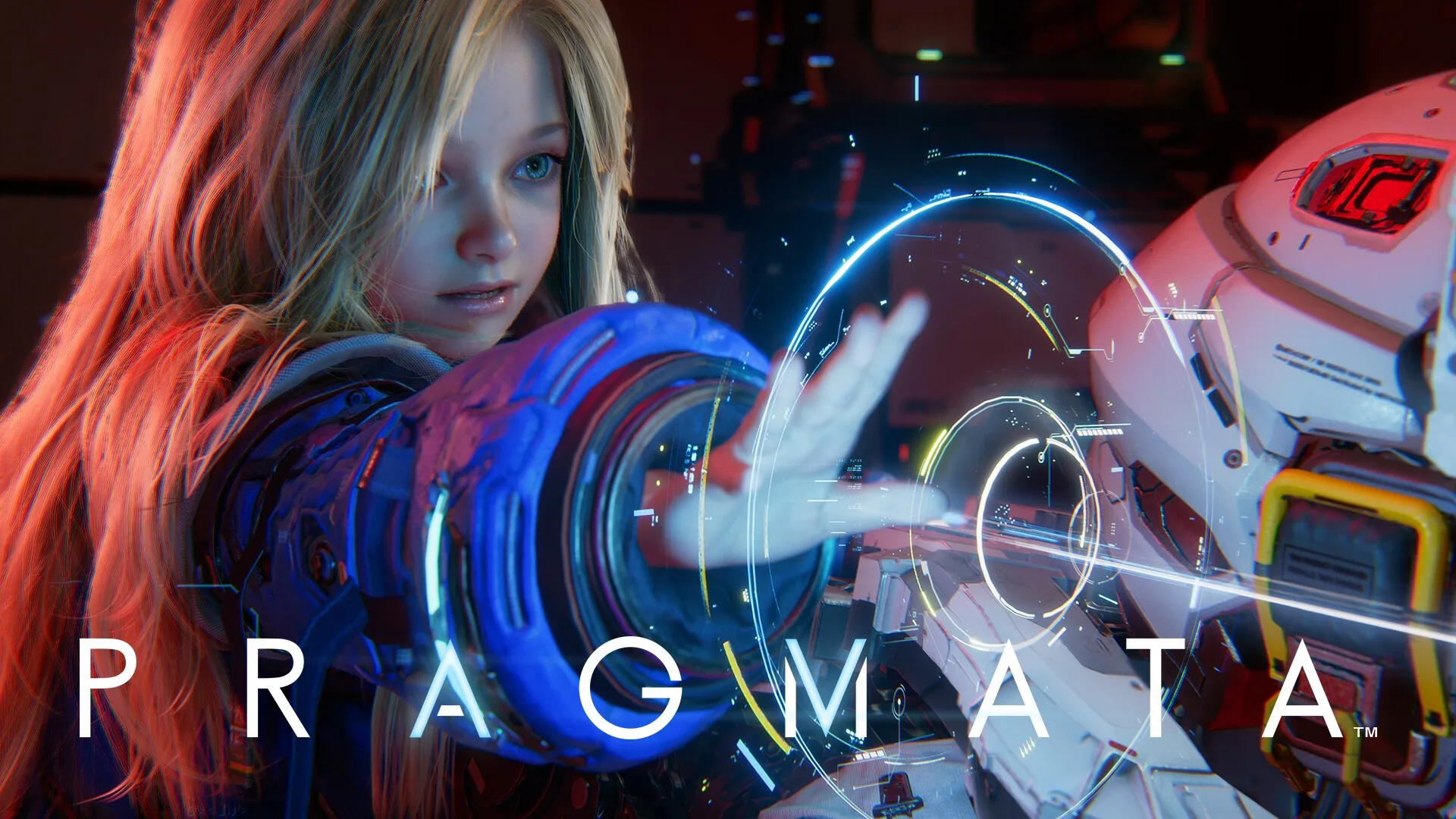
Pragmata distinguishes itself through a combat system that demands two kinds of attention at once. This single-player, third-person science-fiction adventure follows Hugh, a man stranded on a lunar station controlled by a hostile artificial intelligence. His unlikely partner is Diana, a young android whose hacking abilities are essential to their escape.
While Hugh keeps an enemy in his sights, Diana allows the player to navigate a digital grid and expose weaknesses in its defenses. Neither shooting nor hacking is especially effective in isolation, and the battle does not pause while a solution is being worked out. Concentrate too hard on completing a promising route through the grid, and an incoming missile can interrupt the entire plan. Later possibilities include turning machines against one another and redirecting projectiles toward their source.
Weapons add another layer of improvisation. Additional firearms break once their ammunition is exhausted, encouraging frequent changes of equipment and new combinations of attacks. Between expeditions, a shelter provides space to upgrade Hugh’s suit and adjust Diana’s abilities.
The station itself offers more than sterile laboratories. Artificially printed versions of Earth’s cities create unexpected environments to investigate, while the relationship between the protagonists provides an emotional center. Hugh is focused on getting them both home; Diana sees a world full of things she has never encountered before. That contrast gives their partnership an appeal beyond its mechanical usefulness.
2. Resident Evil Requiem — Fear and Firepower in the Same Campaign
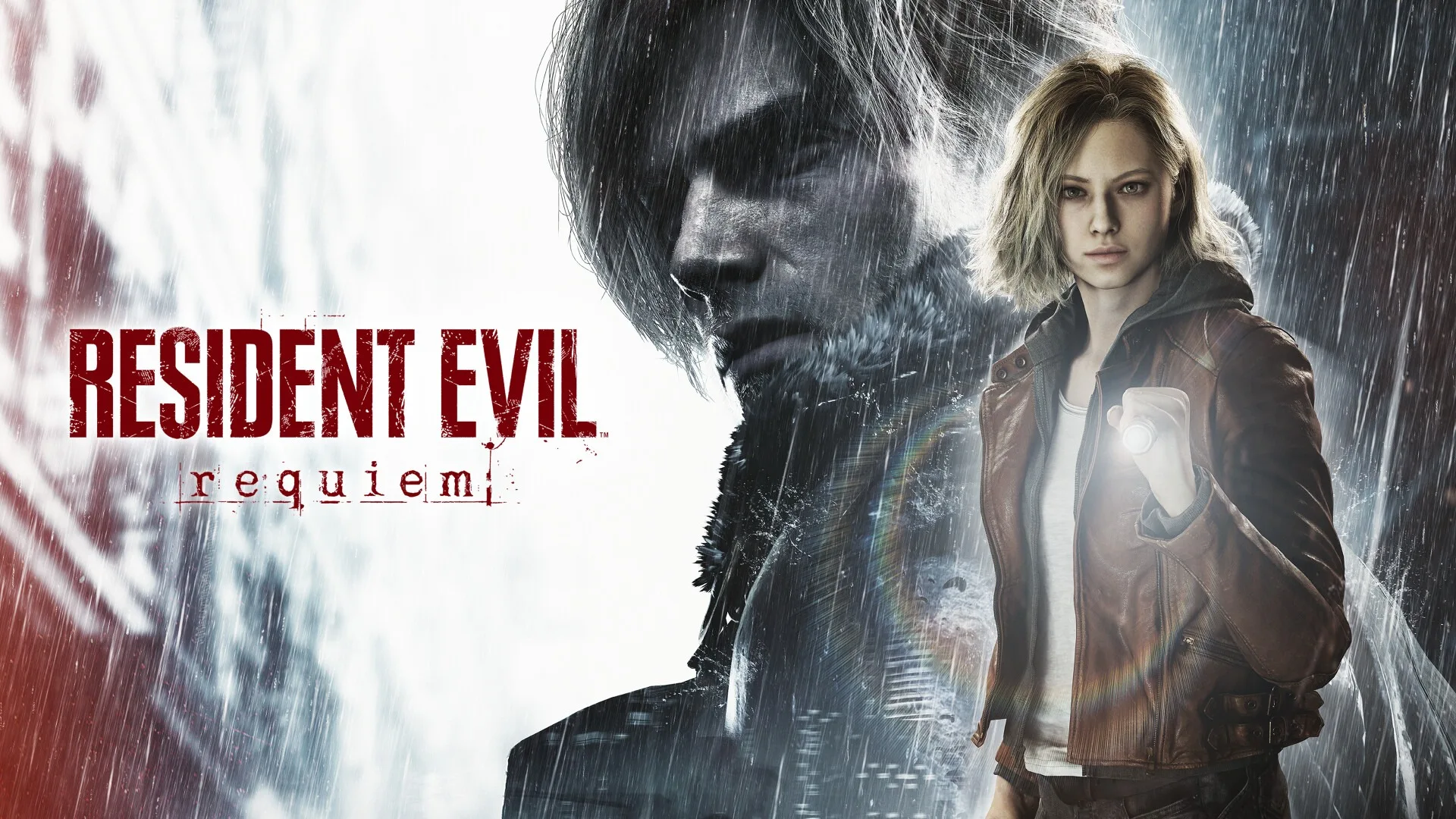
Resident Evil Requiem builds its identity around a contrast between two protagonists. FBI analyst Grace Ashcroft embodies the anxiety of traditional survival horror: limited ammunition, uncertain surroundings, and enemies that are often better avoided. Leon Kennedy offers the release that follows, approaching the same nightmare with considerably more experience and a willingness to fight back.
Their investigations gradually converge around the consequences of the Raccoon City catastrophe. Grace becomes trapped in a medical complex populated by infected staff and patients, while Leon follows a separate trail. The story switches between them, allowing an aggressive sequence to relieve tension before vulnerability returns.
Grace’s sections emphasize searching rooms, solving puzzles, and deciding whether a particular zombie is worth the ammunition required to kill it. Some infected characters retain fragments of their former routines: a cleaner continues cleaning, while a cook remains occupied in the kitchen. Observing those habits can reveal an opportunity to slip past.
Leon changes the pace. Shotguns, axe parries, and close-range attacks replace cautious avoidance with direct confrontation. Both characters also support first- and third-person perspectives, allowing players to choose how closely they want to experience the horror. The attraction lies in that repeated shift between feeling endangered and feeling capable—without allowing either state to become permanent.
3. Crimson Desert — Where Every Detour Becomes an Adventure

The central appeal of Crimson Desert is how easily a journey toward one objective can become something else entirely. A strange structure on a mountain invites a climb. The view from the summit suggests another destination. Gliding down reveals an encounter that makes the original task suddenly seem less urgent.
The story follows Kliff, a mercenary trying to reunite the surviving members of his shattered company. The continent of Pywel, however, offers constant distractions. Medieval fortifications exist alongside airborne structures and mechanical creatures, creating a world in which the next discovery is not always easy to predict. Exploration earns its place here by making curiosity feel productive rather than incidental.
Combat encourages a similarly flexible approach. Sword strikes can flow into kicks, grapples, and throws, with cliffs offering a particularly efficient alternative to finishing an opponent on level ground. Fighting groups requires movement and combinations of techniques, while progression introduces additional moves to experiment with.
Quieter activities provide breathing room between expeditions. There is a camp to improve, equipment to upgrade, and fishing for moments when the mercenary business can wait. The transcript also acknowledges an awkward inventory and confusing storytelling at launch, while reporting subsequent efforts to improve usability and narrative clarity. Its enthusiasm is therefore qualified: the world and combat are the main attraction, even when the surrounding systems are less elegant.
4. Onimusha: Way of the Sword — Precision Combat in a Corrupted Japan
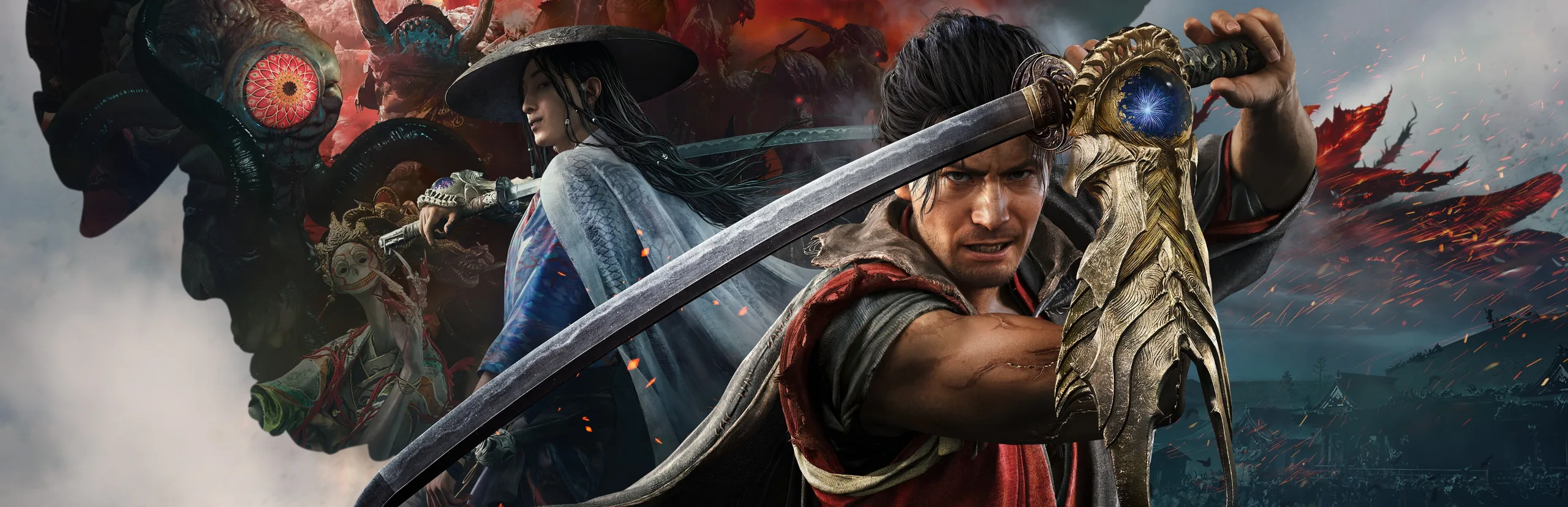
The new Onimusha, titled Onimusha: Way of the Sword, combines samurai action with an unsettling version of Japan in which a beautiful temple may conceal something grotesque. Its protagonist is Miyamoto Musashi, who arrives in Kyoto intending to prove his swordsmanship and instead finds himself confronting a demonic invasion.
An Oni Gauntlet, acquired against his wishes, allows Musashi to absorb the souls of defeated enemies. His rival, Sasaki Ganryu, possesses a similar device, complicating a conflict that is already far removed from an ordinary contest between swordsmen. Musashi’s appearance also draws on Toshiro Mifune, reinforcing the connection to classic samurai cinema. Prior experience with the series is not presented as a requirement.
Rather than offering an open world, the adventure moves through varied, more directed environments. Temple districts and villages give way to disturbing laboratories where human and animal bodies have been subjected to horrifying experiments. Branching routes and environmental puzzles provide reasons to look beyond the immediate path.
Combat depends on reading opponents carefully. Deflections can break an enemy’s balance, while a precisely timed counterattack offers greater reward at greater risk. Absorbed souls support healing and special attacks, and the gauntlet’s abilities also help overcome obstacles. The result is an action adventure that makes room for investigation and problem-solving between its most demanding confrontations.
5. The Blood of Dawnwalker — Freedom with a Deadline
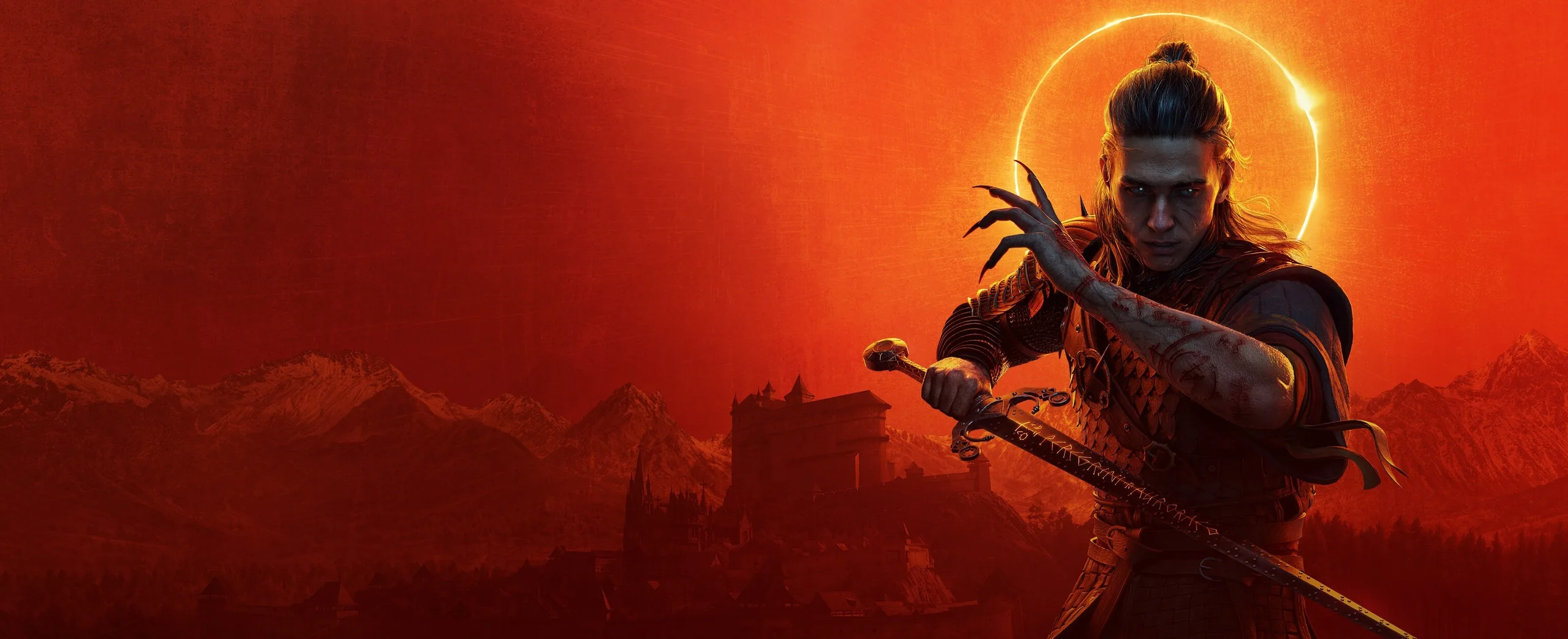
The Blood of Dawnwalker places an unusual constraint on its open-world freedom: the protagonist has thirty in-game days to save his family. Coen is human during daylight and a vampire at night, caught between two forms of existence while his loved ones remain in the hands of an ancient vampire ruler.
The deadline does not mean that every moment spent exploring is punished. Time advances through significant actions and stages of quests, leaving room to search the landscape and consider equipment without a constant real-time countdown. The pressure comes from deciding which commitments are worth making.
An immediate confrontation is possible, but preparation offers obvious advantages. Recruiting allies, assisting rebels, investigating ruins, or undermining the ruler’s followers can improve the chances of success. There is not enough time to satisfy everyone, however, so another person’s request must be weighed against the protagonist’s own goal.
The day-and-night division also changes the available tools. Human abilities give way to vampiric powers and different methods of movement after dark. Access to the strongest abilities requires feeding on blood, introducing an uncomfortable tension between becoming more capable and becoming more dangerous to others.
That is the game’s strongest idea: freedom matters because it has consequences. The question is not simply what can be done, but what deserves a portion of the limited time available—and what Coen is prepared to become to save his family.
6. 007 First Light — A Spy Who Can Survive a Failed Plan

007 First Light approaches James Bond before he has earned his famous number. At twenty-six, he is still a headstrong military recruit whom MI6 is attempting to turn into a dependable operative. Developed by the creators of Hitman, the single-player spy adventure emphasizes infiltration while leaving room for spectacular improvisation when subtlety fails.
Missions move between countries and situations, asking Bond to identify targets and gain access to places where he is not welcome. A hotel hosting a chess championship provides one example: observing guests, listening to conversations, and bluffing through an awkward exchange may accomplish more than immediately drawing a weapon. Larger areas allow different routes, with distractions and Q’s gadgets helping remove obstacles discreetly.
Of course, a Bond adventure cannot remain quiet forever. Car chases and fights aboard a failing aircraft supply the larger action sequences. Close combat makes use of nearby furniture, while an empty firearm can become a projectile once its ammunition is gone. The point is not to preserve a perfect plan at any cost, but to keep moving when that plan collapses.
Mission replay options add new conditions and opportunities to attempt cleaner solutions. The transcript also reports that the PC version suffered crashes and other launch problems, followed by extensive summer fixes. Its assessment presents the game as an increasingly comfortable way to experience a younger, less polished Bond—without pretending that the technical start was smooth.
7. Gothic 1 Remake — Respect Has to Be Earned
Gothic 1 Remake begins with a deliberately unglamorous proposition: the player is nobody important. Thrown into a penal colony enclosed by a magical barrier, the nameless protagonist enters a society that has already established its own hierarchy. The prisoners mine ore for the king, but life inside is governed by competing camps and the people powerful enough to enforce their rules.
Progress begins with learning that society. Meeting the inhabitants of three camps, completing their errands, and choosing an allegiance are essential steps toward becoming more than another disposable newcomer. Characters follow daily schedules, and directions are often communicated through dialogue, making attention more valuable than simply following an indicator.
Outside the camps, even ordinary wildlife can be a serious threat. Enemies do not scale to the protagonist’s level, so retreating from a dangerous area and returning later becomes a tangible demonstration of growth. Experience alone is not enough: teachers must be found, and training must be paid for. Improvement even changes how the protagonist handles a weapon.
The remake expands the colony with additional caves and quests while preserving the appeal of a relatively compact, densely populated world. Technical reservations remain part of the transcript’s verdict, including bugs and performance problems being addressed through patches. Nevertheless, its strongest quality is clear: few things make progression more satisfying than returning to a place that once humiliated the player and finally being able to survive it.
8. REANIMAL — Facing the Nightmare Together
From the original creators of Little Nightmares and Little Nightmares II, REANIMAL follows a brother and sister returning to their home island to rescue missing friends. The setting has become a nightmare of flooded settlements, ruined streets, and distorted creatures, explored both on foot and by boat. Its emphasis is on oppressive atmosphere and the anticipation of encounters players would rather avoid.
Cooperation becomes especially effective during pursuit sequences. One player may identify the escape route while the other struggles to reach it, turning a straightforward objective into a shared panic. Helping each other climb, holding doors, and operating mechanisms together keep both characters involved.
The puzzles are described as relatively simple, but complexity is not the main source of tension. Solving an ordinary problem becomes considerably less comfortable when footsteps can be heard on the other side of a wall. Later access to a knife and crowbar offers limited means of resistance, without making every creature something that can be fought.
Solo play with an AI companion provides an alternative, while the transcript highlights a Friend’s Pass option for cooperative play without requiring both participants to own separate copies. Its estimated five-to-seven-hour campaign makes this a more contained adventure than many others in the selection. The appeal is concentration: a small number of evenings devoted to an unsettling place, preferably with someone else available to panic alongside you.
9. Subnautica 2 — The Ocean Is No Less Frightening with Friends
Subnautica 2 returns to the pleasure of discovering an alien ocean, this time with the option to bring three other players. The premise begins with a colony ship in trouble and an artificial intelligence that continues insisting on settlement despite an environment that seems profoundly unwelcoming.
The early rhythm is familiar and effective: make a short dive, collect resources, construct better equipment, and gradually become confident enough to venture farther. Bright coral formations eventually give way to deep canyons and ruins that are far beyond the safe limits of an initial oxygen supply.
Progression extends beyond equipment. Studying local creatures opens biological modifications, including camouflage, while expanded construction options allow some rooms to change shape and size. A personalized base becomes the starting point for expeditions, and cooperative play introduces shared supplies and opportunities to rescue an overconfident teammate.
The transcript discusses the game in its Early Access form and explicitly notes its limitations: the story is unfinished, with additional biomes and vehicles still in development. It is therefore presented as an exploration and survival experience rather than a complete narrative adventure. Solo play remains available for those who prefer the ocean’s sounds without a voice chat full of alarmed friends.
10. Wardogs — Every Loadout Is a Risk
Wardogs adds financial consequences to large-scale tactical combat. Up to one hundred players fight across three teams, purchasing equipment with their own in-game funds. Money persists between matches, but a soldier who dies loses the equipment taken into battle.
That distinction changes the meaning of a reckless advance. A failed attack costs more than a brief wait for the next respawn; it can erase an expensive loadout. At the same time, earning money does not require exceptional aim. Healing teammates, transporting them to the front, and holding territory all provide useful ways to contribute. A wounded player can even offer a reward for being revived.
Roles depend primarily on purchased equipment rather than rigid classes. One player can focus on fighting, while another establishes and reinforces a forward position. Destructible structures prevent those defenses from becoming permanent guarantees of safety, and the control zone changes location between matches.
The third faction introduces another complication: two teams can weaken each other only to create an opening for the third. The transcript’s enthusiasm for that structure comes with a clear Early Access warning. It reports substantial queues, crashes, and connection problems around launch, with fixes underway. The underlying idea is appealing, but the source does not present the experience as technically trouble-free.
11. Mortal Shell 2 — Build a Fighter from Someone Else’s Remains
Mortal Shell 2 approaches character building through the bodies of fallen warriors. Instead of selecting a conventional class, the player inhabits a shell and equips it to suit a preferred style. A heavily armored figure is not necessarily restricted to a slow weapon; fast paired blades remain a valid choice.
The journey concerns the recovery of a mysterious entity’s stolen unborn children, sending the protagonist through a ruined world populated by monsters and false gods. Larger, interconnected environments encourage detours, with suspicious ruins potentially concealing a dungeon and an optional boss. Knowledge of the first game’s story is not presented as essential.
Combat removes the stamina bar, but not the need for careful defense. The signature hardening ability allows the player to freeze in the middle of an attack, absorb an incoming blow, and then continue the interrupted motion. Weapon modifiers change properties and techniques, while stranger discoveries include a device that fires axes.
New shells and equipment provide reasons to explore, and the ability to recover invested resources makes experimentation possible without restarting the entire adventure. The transcript still acknowledges technical issues under repair, but its main attraction is build flexibility: the freedom to discover an unusual combination and make it work rather than remain confined to a predetermined role.
12. Star Wars Zero Company — The Squad Matters More Than the Individual
Star Wars Zero Company brings single-player, turn-based tactics to the closing stages of the Clone Wars. Playing as former Republic captain Hawks, the player leads a mercenary unit investigating a cult’s plans to spread a deadly contagion.
The squad draws together fighters with different histories, and learning how they complement one another is central to the appeal. A Padawan can push an enemy out of cover with the Force while another operative already has that position in their sights. Success depends on coordinated actions rather than a collection of individually powerful characters.
Story characters can be joined by custom operatives. On missions, flanking, elevation, and careful positioning determine whether a fighter remains useful on the next turn or becomes dangerously exposed. Shared deployments strengthen relationships and unlock paired abilities, giving established partnerships practical as well as emotional value.
Injuries require treatment, and repeated serious wounds can permanently remove an operative from the roster. Between assignments, the base offers opportunities to speak with the team and prepare for future operations. There is also pressure at the campaign level: some missions disappear over time, forcing a choice about where the squad’s attention is most needed.
13. Death Stranding 2 — Making a Hostile World Easier to Cross
The transcript includes Death Stranding 2 through its PC edition, which it places in March 2026. Its central appeal remains the possibility that an ordinary delivery can become a memorable adventure through planning, uncertainty, and improvisation.
Sam Bridges again connects isolated people to a shared network, now primarily across Australia. The environment creates new problems: earthquakes can trigger falling rocks, while floods can ruin a crossing. A shortcut chosen to save a few minutes may instead send precious cargo drifting downstream.
Vehicles arrive earlier, and restoring a monorail helps transform difficult routes into useful infrastructure. Structures left by other players—bridges, ladders, and other practical assistance—continue to give cooperation a quiet but meaningful presence. Someone who never appears on screen can still save an expedition.
Combat offers more options, but armed camps can also be approached stealthily or bypassed. Between journeys, a mobile base reconnects Sam with his companions, while the story continues events established in the first game. The transcript’s reservation is straightforward: players who disliked the delivery routine are unlikely to find its fundamentals transformed. For those drawn to it, the reward remains making an intimidating landscape progressively more manageable, both for themselves and for others.
14. Assassin’s Creed Black Flag Resynced — The Ship Still Steals the Show
The Black Flag remake, officially titled Assassin’s Creed Black Flag Resynced, returns to an adventure in which sailing toward a mission can be interrupted by the sight of a merchant vessel carrying something valuable. The larger conflict may be important, but a tempting cargo hold can be difficult to ignore.
Edward Kenway enters the story seeking wealth, taking a dead Assassin’s clothing and becoming entangled in a conflict he never intended to join. Encounters with Blackbeard, the recruitment of a crew, and the gradual improvement of the Jackdaw support the pirate fantasy.
Loot feeds directly into progression. A better ship can challenge larger targets, board them, and claim their resources. Excessive aggression attracts hunters, ensuring that piracy eventually provokes an organized response. Treasure maps, shipwreck dives, and visits to cities provide variety between naval battles.
According to the transcript, the remake adds officers with personal missions and ship abilities, alongside new scenes involving Edward. Combat and parkour have also been revised, although those changes have not pleased every returning fan. Transitions between sailing and going ashore are described as substantially less interrupted by loading.
The strongest argument for returning is therefore not simply familiarity. It is the continued appeal of having a ship, spotting something on the horizon, and deciding that the planned destination can wait.
15. Forza Horizon 6 — A Racing Game Worth Exploring Between Races
Forza Horizon 6 closes the selection with open-world racing in Japan. Its appeal extends beyond winning events: leaving Tokyo for a mountain road, choosing a favorite car, and trying to link a sequence of corners can become an evening’s entertainment by itself.
The campaign begins with the player as a tourist who must earn a place at the festival and build a reputation. Race victories open further stages, but exploration also contributes to progress. Searching for secrets or driving through snow-covered mountains is not merely time spent away from the campaign; it becomes another way of participating in it.
The transcript describes a collection of more than five hundred cars, with tuning supporting different activities. A machine prepared for mountain duels may be entirely different from one built for off-road driving, while collecting inevitably leaves room for purchases motivated by appearance alone.
Car meets allow players to inspect other builds and adopt shared tunes or liveries. Customizable garages provide space to display favorites, and course-building tools support the creation of new routes, including collaborative projects. The result is a structure with clear competitive progression but plenty to do after the races end—the sort of game in which a group gathers for one event and remains together because someone suggests trying another car.
Final Thoughts — What Makes These Games Stand Out
The strongest experiences in this selection give the player something specific to think about. Pragmata divides attention between shooting and hacking. The Blood of Dawnwalker makes time a resource. Gothic makes strength feel earned, while Death Stranding 2 turns route planning and shared infrastructure into the substance of an adventure.
Not every entry arrives without reservations. The transcript repeatedly acknowledges technical problems, unfinished content, and design choices that will not appeal to everyone. Its selection is more useful for those qualifications, not less.
What ultimately connects these games is their ability to turn a simple intention into a story: reach the next objective, rescue a teammate, complete a delivery, or take one more drive. The memorable part is what happens along the way—and why stopping becomes harder than expected.
Comments 0
No comments yet. Add a thoughtful first response.
Log in to comment